
The short answer
A good AC installation in South Gate starts with a room-by-room load calculation, a duct inspection, and a check of your electrical capacity, not a guess based on square footage. Many homeowners here also consider a heat pump, which cools in summer and heats in winter, and rebate eligibility depends on which utility serves your address.
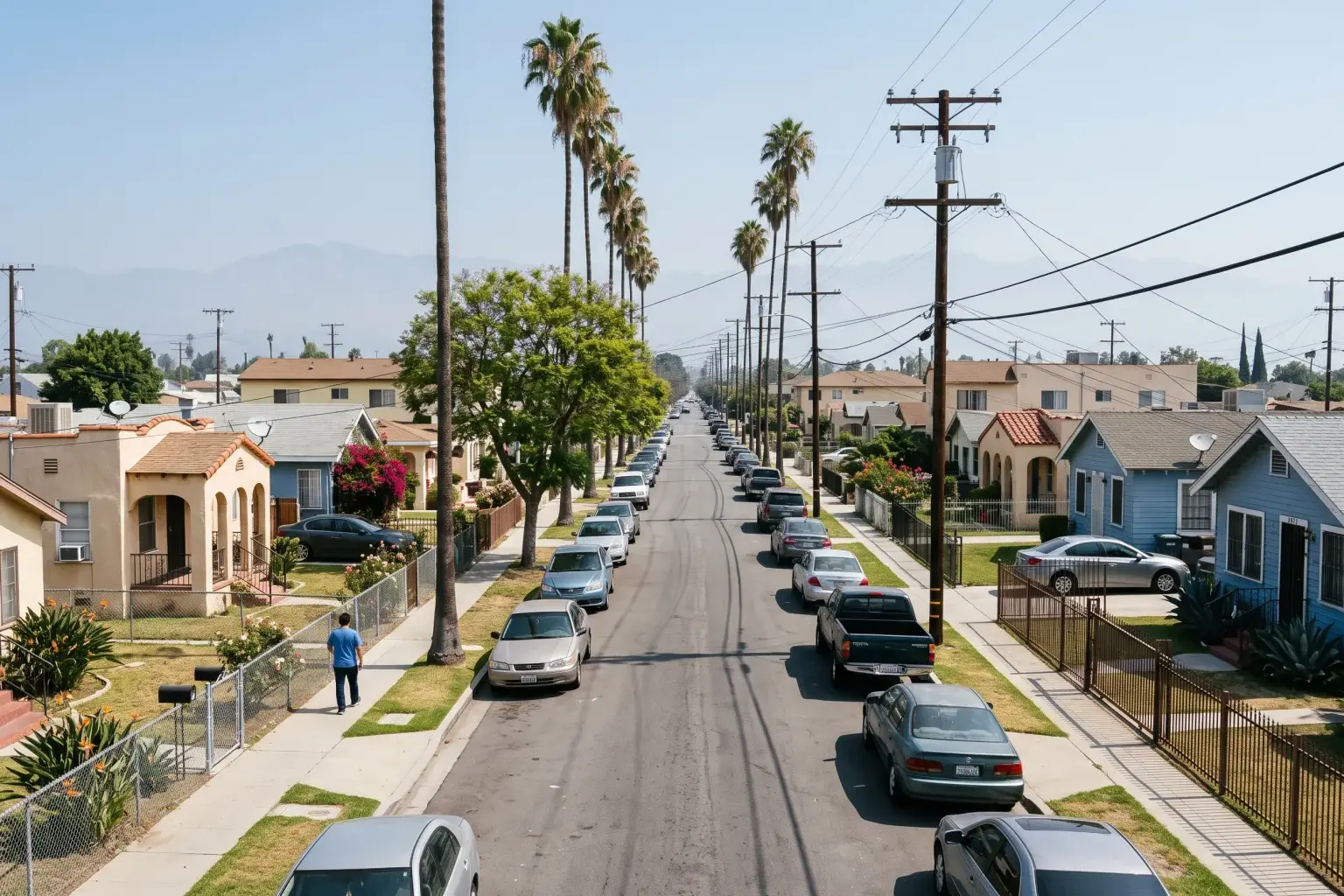
South Gate summers are long and warm, and many homes here were built before central air was common. That means a new AC installation often involves more than swapping one box for another: the ductwork, the electrical panel, and the size of the system all need a close look. Royal HVAC Solutions installs central air conditioners and heat pumps for homeowners across South Gate (90280), about 7 miles east of our Los Angeles base. This page covers what to expect, which decisions matter most, and how to avoid the common mistakes that leave a new system loud, costly to run, or unable to keep up.
Why South Gate Homes Need Careful Sizing
Los Angeles has a Mediterranean climate with dry summers and mild winters, but inland neighborhoods run much hotter in summer than areas near the coast. South Gate sits inland in southeast Los Angeles County, so it doesn't get the steady ocean cooling that beach cities do. Fall Santa Ana winds can also bring hot, dry spells well after summer seems to be over.
Because of that, an undersized system will run nonstop on the hottest afternoons and still fall behind. An oversized system has its own problems: it cools the air quickly, shuts off, and starts again, which wears out parts faster and leaves rooms feeling clammy or uneven. We size every system with a load calculation that accounts for your home's insulation, window area, sun exposure, ceiling height, and how many people live there.
Central AC or Heat Pump?
Many South Gate homes still heat with an older gas furnace or wall heater. If you are adding or replacing air conditioning, it's worth considering a heat pump. It does the same cooling job as a central AC, and it can also handle heating, which in a mild winter climate covers most of what a household needs.
There is also a regulatory reason to think ahead. South Coast AQMD Rule 1111 limits NOx emissions from natural-gas fan-type central furnaces sold and installed in the Los Angeles region, and the district has been amending it toward zero-emission requirements. If your furnace is aging, check the current rule before you plan a replacement, because the district sets and revises the compliance dates. We can walk you through how the rule may affect your options.
What the Installation Involves
Every home is different, but a complete installation usually covers these steps:
- Load calculation and equipment selection matched to your home
- Inspection of existing ducts for leaks, crushed runs, and undersized returns
- Electrical review to confirm your panel and circuit can support the new equipment
- Placement of the outdoor unit with proper clearance and a level pad
- Refrigerant line installation, pressure testing, and evacuation
- Thermostat setup and a walkthrough of how to operate the system
- Final check of airflow and temperatures at the registers
Homes Without Existing Ductwork
Some South Gate houses never had central air, and some have duct systems that are in poor shape. In those cases, we will talk through your choices honestly. Adding new ducts can work well when there is attic or crawlspace room to run them. A ductless mini-split system is often a better fit for homes without that space, for additions, or for families that only need to cool a few rooms. We'll explain the tradeoffs in comfort, appearance, and noise so you can decide.
Rebates and Incentives
Many homes outside the City of Los Angeles are served by Southern California Edison rather than LADWP, so which equipment rebates are available depends on the utility that serves your address. We confirm the current offer before quoting it. For LADWP residential customers, the Consumer Rebate Program offers rebates on qualifying heat pump systems, with the amount based on the unit's SEER2 and HSPF2 ratings. The application is filed after the equipment is purchased and installed, within 12 months of purchase.
One change to note: the federal Energy Efficient Home Improvement Credit (25C) covered qualifying heat pumps placed in service before December 31, 2025. It is not available for new installations after that date.
More services in South Gate
- AC Repair in South Gate
- Heating Repair in South Gate
- Heat Pump Installation in South Gate
- Furnace Repair in South Gate