
The short answer
A ductless mini-split is a good fit when your home has no usable ductwork, when one room is always too hot or cold, or when you've added living space that's hard to connect to existing ducts. We size each system to your rooms, check your electrical capacity, and give you a written quote before any work begins.
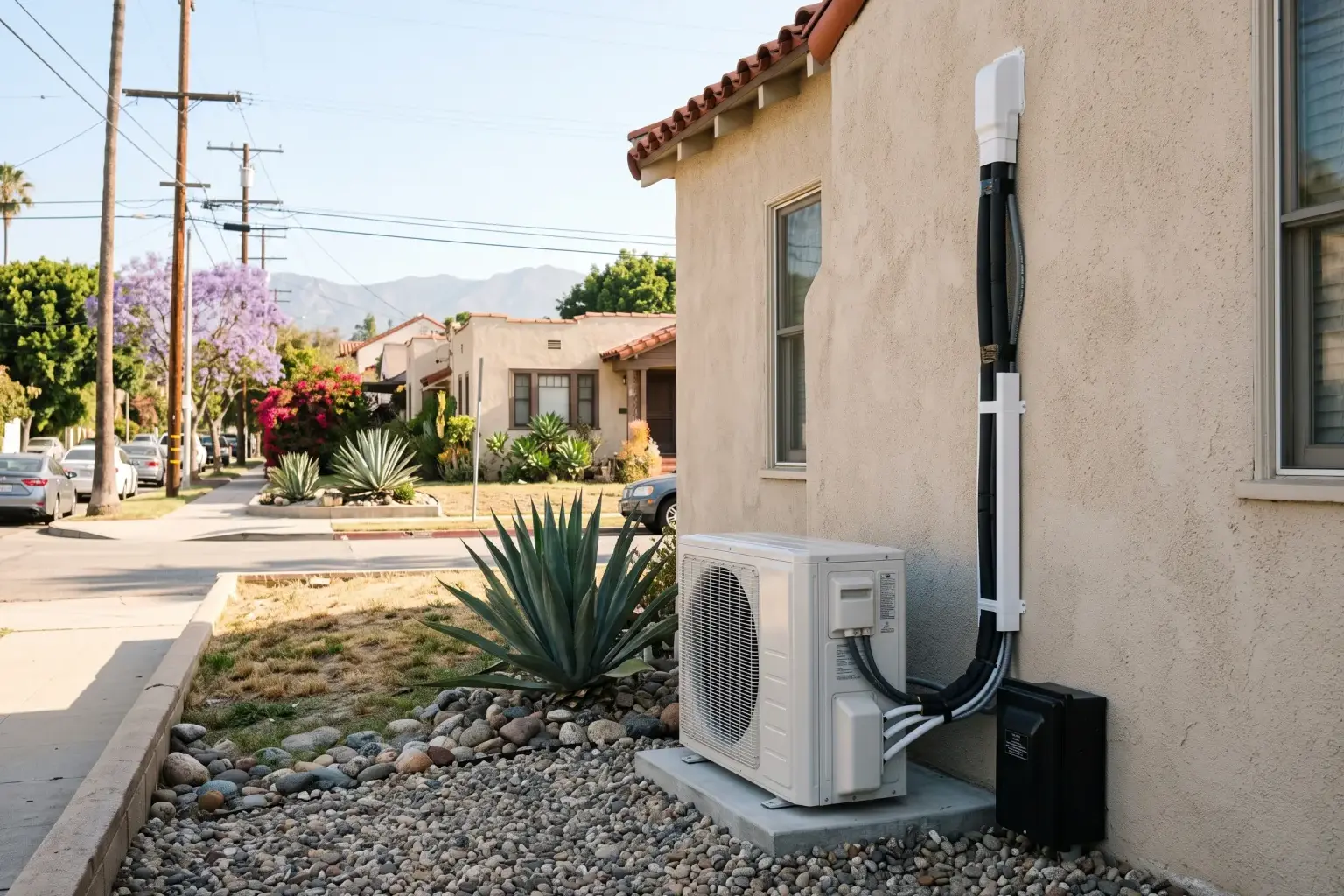
A ductless mini-split heats and cools one room or a few zones without ductwork. An outdoor heat pump connects to one or more indoor units through a small refrigerant line set that passes through the wall. For many Los Angeles homes, it's a practical way to get efficient heating and cooling: older houses without ducts, converted garages, additions, and upstairs bedrooms that never stay comfortable. Royal HVAC Solutions installs mini-splits in Los Angeles and nearby cities. This page explains when one makes sense, what we look at first, what affects the cost, and what to expect from a visit.
Signs a Ductless Mini-Split Makes Sense
Los Angeles summers are dry, and inland neighborhoods and the valleys get much hotter than areas near the coast. Fall Santa Ana winds can add hot, dry stretches. Winters are mild, which suits a heat pump well. A mini-split is worth considering if any of these sound familiar:
- Your home has no ductwork, or the existing ducts are damaged, undersized or run through a hot attic.
- One room, such as an upstairs bedroom, a sunroom or a home office, is always hotter or colder than the rest of the house.
- You've added a room, ADU or garage conversion, and extending ducts would be difficult.
- You're relying on window units or portable ACs that are loud, block light and struggle on hot days.
- Your wall heater or old gas furnace is near the end of its life, and you want heating and cooling in one system.
- You want to control temperatures room by room instead of conditioning the whole house.
What We Check Before Recommending a System
A mini-split only works well when it's sized and placed for the space. Before recommending equipment, we look at the house itself, not just the square footage.
We'll explain what we found and why it points toward a particular setup.
- Room size, ceiling height, window area and sun exposure for each space you want to condition.
- Insulation, air leaks, and how hot the attic or upper floor gets in summer.
- Where indoor units can go: wall-mounted heads, ceiling cassettes or concealed ducted units, depending on the room.
- A route for the line set and condensate drain that is clean, short and protected from damage.
- Outdoor unit placement, including a level pad or wall bracket, clearance for airflow, and distance from bedroom windows and neighbors.
- Your electrical panel capacity and whether a new dedicated circuit is needed.
- How many zones make sense, and whether one multi-zone outdoor unit or separate single-zone systems fit better.
Repair vs. Replace: Your Options
If you already have a mini-split that isn't keeping up, a new system isn't always the answer. Many problems can be repaired, including clogged filters, a dirty indoor coil or blower wheel, a blocked condensate line, a failed sensor, or a refrigerant leak at a flare connection.
Replacement starts to make more sense in four situations: the system is older and needs a major part like a compressor or outdoor control board, it uses a refrigerant that's being phased down and is expensive to service, it was badly undersized for the room, or repairs keep coming back. We'll lay out both paths so you can decide.
If you're replacing a central system, a mini-split isn't the only option. A ducted heat pump may suit a house with good ductwork. Some homes do best with a mix: central equipment for the main living area and a mini-split for an addition or a problem room.
What Affects the Cost
We quote every installation after we've seen the home. These are the main things that raise or lower the price:
- The number of zones and indoor units.
- System capacity and efficiency ratings (SEER2 and HSPF2).
- Indoor unit style. Wall-mounted heads are usually simpler to install than ceiling cassettes or concealed ducted units.
- Line set length and how hard the route is, such as finished walls, stucco, two-story runs or roof penetrations.
- Electrical work, including a new circuit, a disconnect or a panel upgrade.
- Mounting needs, such as wall brackets, pads or line set covers.
- Permit and inspection requirements in your city.
- Removal of old window units, wall heaters or other equipment.
Rebates, Credits and Local Rules
Incentives depend on where you live. LADWP residential electric customers can apply for Consumer Rebate Program rebates on qualifying heat pump HVAC systems, and most mini-splits are heat pumps. The rebate amount depends on the unit's SEER2 and HSPF2 ratings. You file the application after the equipment is purchased and installed, within 12 months of purchase.
Many homes outside the City of Los Angeles are served by Southern California Edison rather than LADWP, so the rebates available to you depend on which utility serves your address. We confirm the current offer before we include it in a quote.
The federal Energy Efficient Home Improvement Credit (25C) covered qualifying heat pumps placed in service before December 31, 2025. It isn't available for new installations now.
If you're weighing a mini-split against a new gas furnace, keep one more rule in mind. South Coast AQMD Rule 1111 limits NOx emissions from natural-gas furnaces sold and installed in this region, and the district has been amending it toward zero-emission requirements. Check the current rule before planning a furnace replacement, because the district sets and revises the compliance dates.
How a Visit Works
It starts with a scheduled visit to your home. A technician walks through the rooms you want to condition, checks the electrical panel, and looks at where the indoor and outdoor units could go. We talk through your options, including where the indoor units will be visible and where the line set will run. Then you get a written quote that spells out the equipment and the scope of work.
On installation day, we protect floors and furniture, mount the indoor and outdoor units, run and seal the line set and drain, and complete the electrical connections. We pressure-test and evacuate the refrigerant lines before releasing refrigerant. Then we start the system and check that it runs correctly in both heating and cooling modes.
Before we leave, we show you how to use the remote or app, set schedules, and clean the indoor filters. We'll also go over the routine maintenance that keeps the system running well.