
The short answer
A heat pump replaces both your air conditioner and furnace with one electric system, and it works well in the Los Angeles climate. Before installing one, we check your home's load, ductwork, and electrical capacity so the system is sized and set up correctly. Rebates depend on whether LADWP or Southern California Edison serves your address, and we confirm the current offer before quoting it.
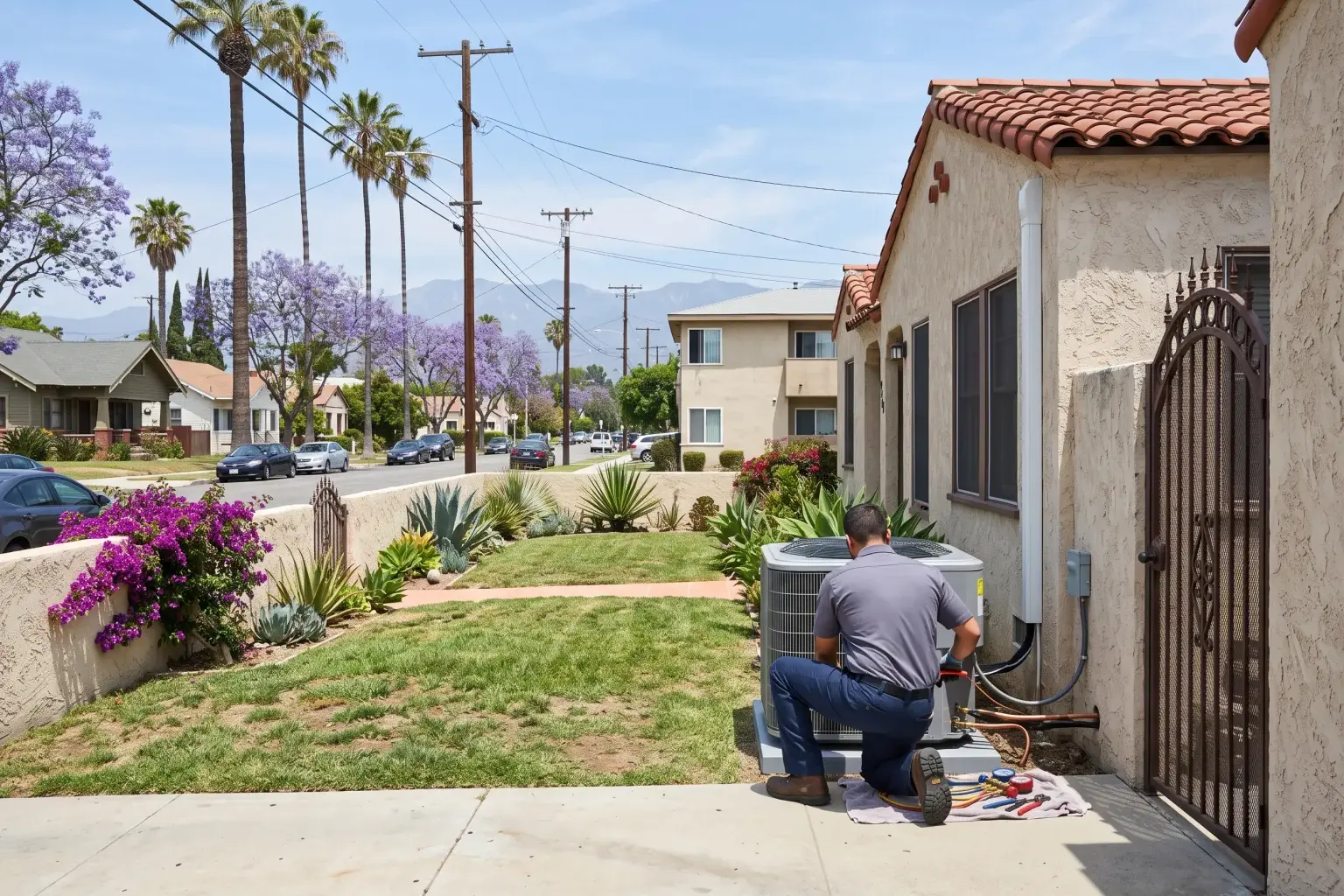
A heat pump heats and cools your home with one electric system. It moves heat out of the house in summer and pulls heat in from outdoor air in winter. For many Los Angeles homes, with long, dry summers and mild winters, that is a practical fit. Royal HVAC Solutions installs heat pumps in houses that are replacing an aging air conditioner, an older gas furnace, or both. This page covers when a heat pump makes sense, what we look at before recommending one, how to weigh repair against replacement, what drives the cost, and what to expect from a visit.
Signs a Heat Pump Installation May Be the Right Move
Most homeowners start looking at heat pumps when something else is going wrong. An air conditioner that struggles through inland heat waves, or a furnace that is old and needs repeated service, is often the trigger. Since a heat pump handles both jobs, it can be worth considering whenever one half of your system is near the end of its life.
Changing rules for gas equipment are another reason to plan ahead. South Coast AQMD Rule 1111 limits NOx emissions from natural-gas central furnaces sold and installed in the Los Angeles region, and the district has been amending it toward zero-emission requirements. If you are planning a furnace replacement, check the current rule, because the district sets and revises the compliance dates.
- Your central air conditioner runs constantly on hot days and still can't keep rooms comfortable
- Your furnace is aging, needs frequent repairs, or makes you uneasy about combustion safety
- Some rooms are much hotter or colder than others
- You want to move off natural gas for heating
- You are remodeling, adding space, or replacing ductwork anyway
- Your existing heat pump is old and repairs keep adding up
What We Check Before Recommending a System
A heat pump only performs well if it is matched to the house. Picking a size from square footage alone can lead to short cycling, uneven temperatures, and poor humidity control. So before we recommend equipment, we look at how your home actually gains and loses heat.
Location matters here. Valley and inland neighborhoods run much hotter in summer than homes near the coast, and fall Santa Ana winds can bring hot, dry spells. A system for a house in the valley is usually sized differently than one for a house a few miles from the ocean.
- Heating and cooling load, based on room sizes, windows, insulation, sun exposure, and ceiling height
- Condition, size, and sealing of existing ductwork, including leaks in attics and crawlspaces
- Electrical panel capacity and whether a new circuit or panel work is needed
- Where the outdoor unit can sit, with attention to clearance, noise, and access
- Indoor equipment location and condensate drainage
- Thermostat compatibility and whether zoning or ductless heads would help
Repair or Replace: Your Options
Not every problem calls for a new system. If your current heat pump or air conditioner is in reasonable shape and the issue is a single failed part, such as a capacitor, fan motor, or sensor, a repair is often the sensible choice. We will tell you when that is the case.
Replacement makes more sense when the equipment is old, uses an outdated refrigerant, needs a major component like a compressor, or has a history of repeated breakdowns. In those cases, putting money into the old unit can delay a decision you will have to make soon anyway.
When you do replace, there is more than one path. You can swap an existing heat pump for a newer one, replace an air conditioner and gas furnace with a ducted heat pump, keep a gas furnace as backup in a dual-fuel setup, or use ductless mini-split heads for homes without ducts or for additions. We lay out the options that fit your house and explain the trade-offs of each.
What Affects the Cost of a Heat Pump Installation
Every installation is priced after we see the home, because the main cost drivers vary widely from house to house. These are the factors that make the biggest difference.
Rebates can also change your final cost. LADWP residential electric customers can apply for Consumer Rebate Program rebates on qualifying heat pump systems, with the amount based on the unit's SEER2 and HSPF2 ratings. The application is filed after the equipment is purchased and installed, within 12 months of purchase. Many homes outside the City of Los Angeles are served by Southern California Edison instead, so available rebates depend on the utility that serves your address. We confirm the current offer before quoting it. The federal 25C tax credit for heat pumps applied only to systems placed in service before December 31, 2025, and it is not available for new installations.
- System size and type: ducted, ductless, or dual-fuel
- Efficiency level and features such as variable-speed compressors
- Ductwork repair, sealing, or replacement
- Electrical upgrades, including new circuits or panel work
- Removal of old equipment, including a gas furnace
- Difficulty of access in attics, crawlspaces, or tight side yards
- Permits and inspections required by your city
How a Visit Works
First, we talk with you about what is bothering you: hot rooms, high bills, an old furnace, or plans to go electric. Then a technician walks the home, inspects your current equipment, checks ducts and electrical capacity, and takes the measurements needed for a load calculation.
Next, we review options with you in plain language and give you a written proposal that spells out the equipment, the scope of work, and what is included. If you decide to move forward, we schedule the installation, handle permits, remove the old equipment, and install and start up the new system. Before we leave, we test operation in both heating and cooling, set up the thermostat, and show you how to use it and when to change filters.
Heat Pump Installation by city
- Heat Pump Installation in Inglewood
- Heat Pump Installation in Hawthorne
- Heat Pump Installation in Gardena
- Heat Pump Installation in Huntington Park
- Heat Pump Installation in Culver City
- Heat Pump Installation in Vernon
- Heat Pump Installation in Lawndale
- Heat Pump Installation in South Gate
- Heat Pump Installation in Lynwood
- Heat Pump Installation in Compton
- Heat Pump Installation in Maywood
- Heat Pump Installation in Cudahy