
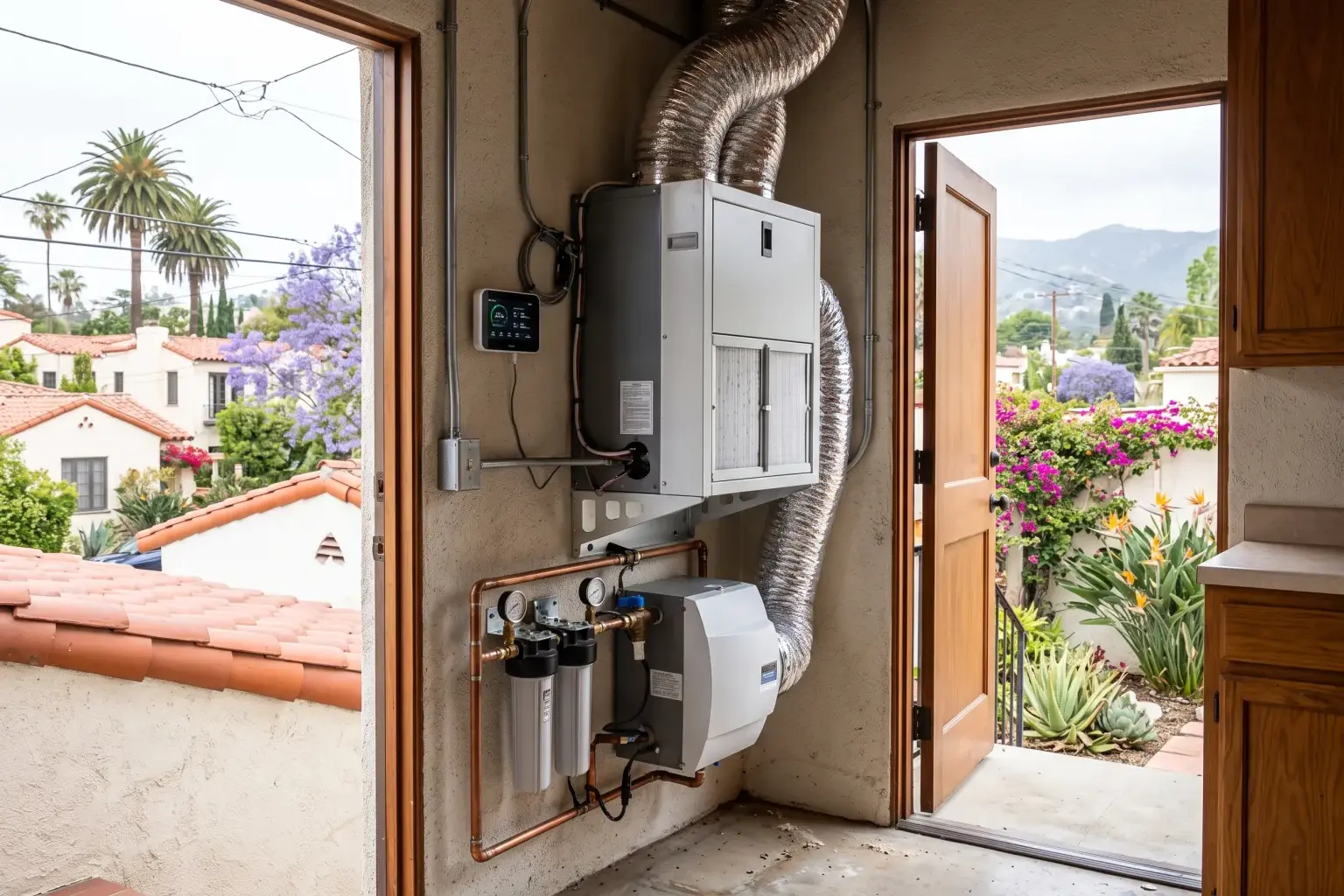
The short answer
Most indoor air quality problems in Los Angeles homes come from the HVAC system itself: poorly fitted filters, leaky return ducts, dirty coils, or moisture in the drain pan. An inspection finds the cause, and many issues can be fixed with repairs or cleaning before you consider add-on equipment.
Indoor air quality problems in Los Angeles homes usually show up in ordinary ways. Dust comes back a day after you clean, rooms feel stuffy, or a musty smell appears when the system kicks on. Sometimes allergy symptoms ease as soon as you leave the house. Your heating and cooling system pushes nearly all the air in your home through the same filter and ducts, so it's usually the first place to look. Royal HVAC Solutions inspects the parts of your HVAC system that affect the air you breathe and explains what we find in plain terms. Then we recommend fixes that match the actual problem instead of a one-size-fits-all package.
Signs Your Home Needs an Indoor Air Quality Check
Los Angeles has dry summers and mild winters. In the fall, Santa Ana winds can push hot, dry, dusty air into neighborhoods for days at a time. Homes in the valleys and other inland areas often run the air conditioning for long stretches with the windows shut, so the same indoor air gets recirculated over and over. Closer to the coast, complaints lean more toward musty smells or damp spots.
Either way, the system that heats and cools your home is moving that air around. Watch for these common signs:
- Dust settles on furniture within a day or two of cleaning
- Allergy or sinus symptoms that are worse at home than elsewhere
- Musty, stale, or burning smells when the system turns on
- Dust streaks, debris, or dark spots around supply vents and return grilles
- Rooms that feel stuffy even when the temperature is right
- Static shocks, dry skin, or irritated eyes during dry spells
- A filter that clogs well before its scheduled change
- Lingering odors after remodeling, a new pet, or nearby wildfire smoke
What We Check During an Indoor Air Quality Visit
An indoor air quality visit is an inspection of how air enters, moves through, and leaves your system. It is not a pitch for a gadget. We focus on the components that touch the air your family breathes:
If we can't fully assess something by sight, such as duct damage hidden inside a wall, we'll tell you what we can and can't confirm so you're not guessing.
- Filter and filter rack: correct size, proper fit, and whether air is slipping around the filter through gaps
- Return air path: blocked, undersized, or leaky returns that pull in attic, garage, or crawlspace air
- Ductwork: disconnected sections, torn insulation, crushed runs, and dust buildup at accessible points
- Evaporator coil and drain pan: dirt, standing water, and growth that can cause odors
- Condensate drain line: clogs or slow drainage that keep moisture in the system
- Blower wheel and compartment: buildup that reduces airflow and spreads debris
- Gas furnace venting and burners: signs of combustion problems, which we flag for safety
- Existing add-ons: the condition of any air cleaners, UV lights, or humidifiers already installed
Repair, Clean, or Upgrade: Your Options
Many air quality problems have simple fixes. A filter rack that lets air bypass the filter, a disconnected duct in the attic, or a clogged drain line can often be corrected in one visit. Those repairs frequently make a bigger difference than adding new equipment, because they stop dirty air from getting into the system in the first place.
When the basics are sound and you want cleaner air, there are several upgrade options:
Sometimes replacement is the better answer. If ductwork is badly deteriorated, or an aging system with a corroded coil or failing blower keeps causing problems, add-ons may not be a good use of your money. If you're considering a new furnace, note that South Coast AQMD Rule 1111 limits NOx emissions from gas furnaces sold and installed in this region. The district has been amending the rule toward zero-emission requirements, so check the current rule before choosing equipment. Heat pumps may qualify for utility rebates depending on whether your home is served by LADWP or Southern California Edison. We confirm the current offer for your address before discussing it.
- Media filter cabinets that hold a thicker, higher-efficiency filter, if your blower can handle the added resistance
- Whole-home air cleaners installed in the return or supply
- UV lights aimed at the coil to limit growth on wet surfaces
- Sealing leaky ducts or replacing damaged sections
- Fresh-air ventilation for tightly sealed homes
- Humidification for very dry periods, set up carefully to avoid moisture problems
What Affects the Cost
You get a written estimate before any work begins. The total depends on several factors:
We'll point out which items address the problem you called about and which are optional, so you can prioritize.
- Whether the fix is a repair, a cleaning, an add-on, or a larger replacement
- How easy it is to reach the equipment and ducts in an attic, crawlspace, closet, or on the roof
- The size of the home and the number of duct runs involved
- The condition of existing ductwork and insulation
- The type of filtration or air cleaning equipment you choose, plus ongoing filter or bulb replacement
- Whether electrical work or changes to the return air are needed
How an Indoor Air Quality Visit Works
Here's what to expect from start to finish:
You don't need to prepare much. Clearing a path to the indoor unit, attic access, and return grilles helps the visit go faster.
- Before we arrive, we ask about the symptoms you've noticed, when they happen, and the type and age of your system.
- On site, the technician inspects the equipment and checks accessible ducts in the attic, crawlspace, or garage.
- We walk you through what we found, with photos when they help, and explain the likely cause.
- You get a clear list of recommended repairs and any optional upgrades.
- Simple repairs can often be done during the same visit. Larger jobs are scheduled at a time that works for you.
- Afterward, we show you how to change filters and care for any new equipment.